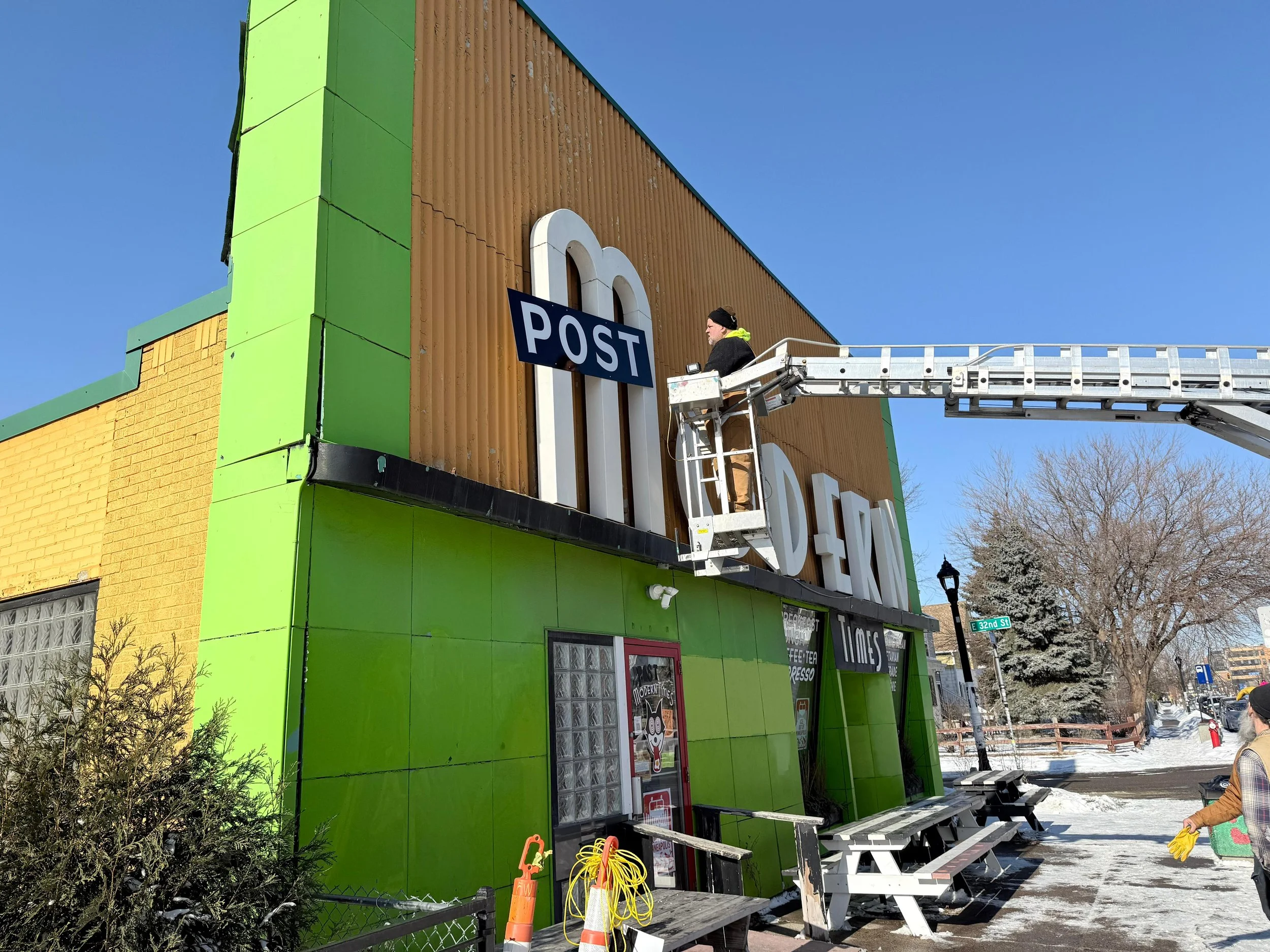
Modern Times Cafe, Minneapolis, Minnesota
Key lessons from Modern Times Cafe. A pillar in the neighborhood.
Edited Transcript of the Interview
Jess (00:00)
If you can bring us in a little bit into the backstory of the decision to make the shift and depart from business as usual, like was there a team meeting? Like what has that been like since Saturday when y'all or think maybe you the decision Sunday or?
Dylan (00:13)
So it's was, has been really hard managing staff through crisis. People are not ⁓ able to go on as normal in crisis. Obviously people's brains are off. People don't, they want to be somewhere else either in safety or helping. ⁓ I guess the first step of this was we started this like people's price and started offering a pay what you can meal or free meal to anyone that needed it. And you know, things that we could do that were offering comfort, that were helping people that were struggling economically, and also gave my staff like more value in coming to work instead of just saying, oh, I'm going to go make, you know, $200. They were like, we're doing something bigger and helping people. And Minnesotans aren't people that ask for help very easily. And so after a week or so it was working, we’re bringing, getting food to people that needed it.
But it was surprising how few people, you know, most people were coming in and giving more.
And then, when on Saturday, I just was just so impacted by the second killing that I had this, I was like, we have to make a radical change. We have to like, we can't show up to work tomorrow and just like be operating this restaurant.
A, the...the amount, you know the structure and the amount of management and people and communication involved in running a restaurant, especially brunch, which is horrific, ⁓ is really high. It's very high. There's, it's a really hard job and it felt meaningless, you know? So I was like, had this idea just to make a radical shift, given how people had reacted to this like small version of this. I was like, I feel like, I feel like this is a gamble that I'm willing to make that people will respond. You know, this is like a gamble on kindness or like humanity and we need it. So I messaged my staff and I was like, basically an outline of this plan. And I was like, you know, Sunday, this horrific thing happened. I think we should close and have a meeting and here's an outline of what I'm thinking. And, and I can't make this decision for you, for this to work, everyone has to be on board. And if you have like, what are your, like bring your concerns, we'll talk it through.
This is moving super fast. So, you know, we have no analytics, we have no systems in place, we have no structure. It's, but I don't feel like we can just carry on as if normal. ⁓ And so we met and I had written like, kind of a speech which ended up being the Instagram post after my wife edited it very well. ⁓ And you know everyone was like, yeah, fuck it, let's do it… That was kind of the, that was the strike aspect of it, of saying like, let's withhold this from the government as an occupied state. This is wartime ⁓ and also I've seen the generosity of people,
putting our first kind of idea out there on the internet, people responded well and sent money and our neighborhood group and our people were like, how can we get involved in this? Had an overwhelming number of people trying to volunteer.
So, yeah, so everyone agreed. ⁓ I had one employee that was like, I can't not get paid because her girlfriend wasn't working at the time. I was like, whatever you need, if you need to go on paid time leave for the, we'll figure it out. And I promise you that you will not make any less money.
But so we scrambled and somehow got it done. I mean, yesterday morning I was like printing off menus at nine o'clock and like posted that stuff like in them. It was couldn't have been more down to the wire. And we were just packed, you know. So ever since yesterday and today, we're just full house press, you know, just I don't personally use social media. So I've been having to use it during this crisis. And, you know, it's crazy. It's like 600,000 people in a day have seen this post and, you know, which I'm like, this is the lens that we're under right now. This is like, this is how many people are relying on Minneapolis and And this is the time to make radical change. If we can show a different path through this and expose the fragility of small business economy and find, just be open enough to say that we're not doing well, no one's doing well before this and now everyone's gonna lose their business. Everyone is at risk of going out of business or just going into debt at a higher rate.
The night before I was like, God, what am I? I'm feeling nervous. I was like, my stomach, I haven't felt nervous in 20 years. and I couldn't really like quantify it at the time of like why I was feeling so nervous. And that was because of how big of a deal it was. So it's been, man, we're just at the start. I have no idea what this looks like as it continues or how it transitions or how, how we can turn this into a model for the future, how we can like create a model and show other businesses also how to do this and what that is even. But in two days we've received …enough to just be like, we can just keep doing this...
Joanna (08:21)
Wow.
Jess (08:22)
If you don't mind just walk us through your personal experience over the last few weeks. It sounds like you've mobilized very quickly as a business in the wake of violence.
Dylan (08:34)
yeah, we, I mean, we've seen a lot in like, you know, we're six blocks away from George Floyd Square on Chicago Avenue.We watched January 6th in the, like on a computer in the restaurant, you know, it feels like our staff or this restaurant has seen all of these huge upheavals in the last 15 years pretty close. So that the day that, I mean, it really escalated when Renee Good was killed and we, some member of my staff heard about it through a signal group or some, I’m not, I can't remember how they found out, but it was right after it happened and it was close. I mean, four blocks essentially. I, people started kind of talking about it and I was like, everyone just keep doing what you're doing. And I drove, over to see what was happening and it
looked like the start of a civil war. You know, it was, I raced back. I was like, we're closing, like anyone that feels like they need to be on the street and like show up to this, like go now and we'll figure out other closing later. If you don't, you know, you can stay behind and work on the closing duties and so I walked back over pretty quickly and was there. Ice was still there. It was so it was surprisingly and shockingly violent for federal agents and a group of bystanders and witnesses. Like many of them, it was basically like customers an old employee, friends, all people that I knew personally were some of the original eyewitnesses to this event. So we were there and stayed and watched and the police escorted ICE out and there was upset and confusion. And most of us stayed there the day and it was, you know, we were just like, this is insane. And nothing is going to be the same after this. ⁓ And then it just continued. There’s, the next day I was out chipping ice and I...I think it was the next day. And I heard whistles a little bit further away. It was a block, so it five blocks, but I was like, I'm gonna go walk and check it out. And it was one of the ICE raids that made all the news where they had, a bystander who had her car parked. They blocked off Park Avenue, which is a...Renee Good was killed on Portland, which is a one way out of downtown and it's three lanes and then two blocks over is Park Avenue, which is one way the other way. So they had blocked off and they're busy streets. It's thoroughfares to downtown and a lot of commuters are on them. It's a residential street, but it's high traffic. So I came to the intersection of 35th and parked and there was, they had blocked off the street completely. My kids' old Spanish immersion preschool and church was on that corner. They were being super aggressive. There was like a moment, one of the viral moments of the ICE agents slipping and then starting to lash out. I mean, I was standing right there and it was, I was just like, I can't get arrested. I'm gonna like make sure that that doesn't happen. I mean, it was one of the most insane things I've ever witnessed. Just unprofessional, violent, untrained people just scrant like no order, no seemingly command structure. They, the woman was, you know, they had the entire street blocked off and they weren't directing traffic or anything and this woman was just, I think, trying to see how she could get to her doctor's appointment. And she was trying to turn off of Park and they stopped her and just smashed her window out and drug her out of her car.
You know, this wasn't anyone involved in this. She was brown skinned, which seemingly is a reason for them. And, you know we were just like, at that point, more people had gathered. There was the city councilman was there for our district, our state assembly person, Aisha Gomez was, you know, this was like not a bunch of like young activist protesters. This was like the city and they were so violent. and, and making mistakes and things, and then lashing out and like attacking people because of their mistakes. And they, you know, after a point, there was enough civilians around that we were like, leave, like everyone was just chanting leave. And we had enough people at that point that they were leaving. But they just started firing tear gas at us. And the wind was blowing away from the group of them. And they're shooting tear gas towards the preschool. There's, you know, like, parents running their toddlers without clothes on, away from going to get them from the preschool and get them to safety. I mean, it was insane. And then they started shooting at us with concussion grenades and tear gas and ⁓ all these things in their retreat. And there was like a point where I watched a ICE agent so nervous he couldn't pull his pin of his smoke bomber, concussion grenade out and just dropped it and left it unignited on
the street. And they like, as they were leaving, they kind of inflicted as much damage on the crowd as they could. And then they were gone.
And so,that was...that was a very, and then I walked back to work, you know, cause I was like, I actually have to go back to work and work the rest of the shift.
So that's been, I think that that's, that's kind of the story of most people in the city that are living in these conflict zones of like seeing violence. Like I've had guns pulled on me multiple times in my life. I’ve seen, I've lived through several cities under occupation of the National Guard. You know, like I'm not, I've lived in bad neighborhoods and like been around violence for a long time. And it's not something that frightens me. ⁓ And Saturday after they executed Alex Pretti scene, my, I went there also after I heard that happened and my wife was at the gym and she met me there and we were on Nicollet Avenue and just seeing the response of these border patrol. And it was just, I mean, viciousness, just like, and it shook me. I was like, these are government employees and they want to kill us and they're going to keep killing us. And it is a pretty unsettling feeling, you know.
So a lot of people experiencing a lot of trauma and then like going to work or cooking their kids din, you know, just like getting gassed and feeling sick for two days and just unimaginable instances in the neighborhood that's already seen like the vicious murder.
So, and it's also like, how is our neighborhood under this lens again? Like we're, all of our stories are in the world news right now and our actions are amplified to this degree and it is pretty surreal feeling, you know, we're like.
Jess (18:20)
And I imagine too your, I mean, you're in a leadership position here for your team. You're coming back to work. There's a staff community here. Like, what, what has that been like as a, ⁓ I mean, we both know, because we come from small business backgrounds and our families and our own life before this, like there's a certain kind of community leadership that is involved in that process. What's it been like to hold that?
Dylan (18:46)
I mean.
I guess a lot of these ideas have been culminating and it wasn't like something,
I’ve understood that like these equations are off, that the economy not going by like an inflation rate, ⁓ that is a trackable trajection for like, I mean, and I didn't go to college. ⁓ I, a lot of my business skills are self-taught and mostly, and a lot of intuition. I mean, I follow my gut a lot and that doesn't usually, never strays me to the wrong path. So, the last two years have been like me thinking more about how this isn't working. You know, this is like, my restaurant is, we're only open nine to three. We're fairly small. We ⁓ sell over a million dollars in sales a year. We have a thriving merch and t-shirt business that's, I think we sold $80,000 in t-shirts this year, which is a
margin that's, yeah, it's, I mean, all the things are, all the numbers minus this enormous labor and labor tax rates are just, we can't stay ahead of. And I don't feel like my staff even can, can really succeed. Pre-2010, I think I had 14 employees that bought houses, or pre-2020, 14 employees that buy houses, and I don't think any since. It's, we just, every year is like, is this the year I close, I just like can't, like, I'm getting, my body is wearing out, you know, I'm working such insane amounts of time and making very hard decisions. So. ⁓and I've had to make a of decisions, you know, through the pandemic, through, George Floyd, all this stuff like quickly and decisively.
So one thing is that my staff, especially my staff, I've had several people have worked for me for longer than 10 years. A lot of people around five years, they trust me. They know that, they can trust my leadership and I consider myself a strong leader and a good decision maker, especially in crisis.
Joanna (21:31)
Dylan curious about like the history of Modern Times Cafe and how you started it, including anything around, you know, community care that y'all are doing right now has that always been kind of part of its DNA ?
Dylan (21:49)
Yeah, I, let's see. I was living outside of Olympia in 2007 to 2010 where I, I started working at a bike shop. It was the first time I had ever, I had been a mechanic, home mechanic and things, but I started working at a shop it was the first shop I had worked at.And within two months, the owner actually was just like, I don't want to keep doing this. And he ended up having this,
random conversation with me and a manager that had worked there for 14 years. And he was like, I think I'm just going to give this business away because it's not making money and it would be easier. Do you want it? And the manager was like, no,you know not taking him seriously. And I, at the time, was like, yeah, I'll take it. Long story short, two months later, he calls me and was like, the business is yours if you want it. And so he gave me this kind of dying bike shop for a dollar. And I turned it around and ran it and had a child and my partner and I wanted to move back to Minneapolis. So we moved back and sold it with the intention of starting a restaurant. So I had this like pretty random stroke of incredible luck ⁓ that brought me here and I was, my partner at the time and I had bought a house and I was taking my daughter sledding and I had been kind of looking for restaurant opportunities and I walked by Modern Times the day that they put a for rent sign in the window and called them from across the street and went and looked at it and signed a lease that day.
My, at the time I was living with a good friend of mine and my daughter's mother. And we, the friend of mine, I'd grown up with and was like a career server and restaurant pursers came from a very like impoverished background. And ⁓ my partner at the time was, was pregnant with my second child. And we, I mean, I made the decision, I guess. But we, when we organized, organized it and gave each of them a third of the business. And then, so we opened Modern Times with three people in 2010 and we got a bunch of community support. We had a lot of
people here and people came and helped and we you know, remodeled and opened it in like a month and half. Half of the restaurant at the time was, it was a really large space and it wasn't something I was comfortable with just opening up this giant dining room that could, you know, fill 70 people. Cause I hadn't, I hadn't worked in a restaurant since I had started my first one and yeah, I hadn't even cooked in like a long time.
So we opened and half of the restaurant we made into art studios.So when it, when it, when we started,we kind of had this community of artists that started renting. Some of them worked for the restaurant. Some of them didn't. ⁓ but we had all these friends and tradespeople that all pitched in and, you know, helped get all the things done to open this restaurant. And then we charged cheap rent to artists and ⁓ they had studios in half of the space. So I guess it didn't start with a democratic mindset, but it started with the help of the community. And that was like how we always continued on. ⁓
And this neighborhood is a very culturally diverse neighborhood. It's kind of different because it's also really high homeownership because of the market crash in 2008 or nine, I can't remember, but a lot of foreclosures happened in Minneapolis in general. So there was just this huge shift of homeownership and this neighborhood, the central neighborhood was one that we just have a really diverse neighborhood of homeowners, which is kind of rare. So when we opened, I was like, I want, I want to base our menu on a reflection of the neighborhood in a way that I can and like through my own filter. But you know, I've seen a lot of, I've lived in a lot of gentrified neighborhoods and seen a lot of of what happens when people put work into a neighborhood or people put work, you know, bring stuff back to have developers come in and swoop in, price everyone out and restaurants generally that follow or restaurants that come in with a very like soul identity, you know, like a French restaurant in a neighborhood that is just pulling in customers from somewhere else. You know, places that don't really have the identity of the neighborhood in mind. And so I made a menu that had these reflections. It had been a ,this place had been a Mexican restaurant most previous. After we open, sometimes we'd get customers, like Latino customers that would come in thinking it was the old business if they parked in our back parking lot. And some of them were not scared off by us and then became like long-term regular customers. And like things like having more authentic chorizo or things on our menu was identifiable to these communities. And they were like, this isn't like just a free cafe, I can see parts of this menu that are a reflection of my culture. So that, you know those things just kind of seeded the natural progression after that, knowing a lot of artists, having artists involved and having this old art deco building and all these things just, I guess created this like cultural hub. And also that I was 30 at the time and you know, it's unique in my culture, I guess, for people to start businesses that are big and real and a storefront, you know, and multi-tiered and complicated. Like we opened and didn't advertise at all. And we had a line out the door, I mean, it was kind of nuts, , and then we,
Joanna (29:32)
Wow
Dylan (29:33)
we kind of maintained business after that. We had the sign, the, have you seen our building, the front of the building that has this art deco modern? Well, that was in the basement at the time. When I was going through the tour, I saw the letters stacked in a pile and you could see it had been in modern times when the previous landlord had opened it in 79. But the Mexican restaurant had took the letters down and the times was long gone, but it was like a ghost ⁓ lettering in the front of building. You could see the sun shading of the modern and like the old glue from the times. So, ⁓ yeah, it said Modern Times. And so I was like, that's, we have the, we have to name it that. So there was a lot of, I don't know, like serendipitous.
Joanna (30:34)
and honoring community and history that was already there.
Dylan (30:37)
Yeah, yeah. And just, yeah, seeing, like looking at the neighborhood and not, not like choosing ego over, like respect of people around you.
Jess (30:50)
You all really, you had a fit from the beginning.
Dylan (30:56)
Yeah.
Yeah. I mean, it was, yeah. I mean, there's a reason why I signed ⁓ my business, my then to be business partner was in Europe at the time. And I like, I think I had to email her and be like, signed a lease.
Jess (31:12)
⁓ Okay, well, that's amazing. So if you were to reintroduce like, okay, you're now Post Modern Times, how would you reintroduce yourself as a business? Like if this is what you started day one, you know, Post Modern Times is a da da da, you know.
Dylan (31:29)
I don't... I don't know. I mean, like this. We're not the first restaurant to do this. There's a restaurant here that opened with this structure. ⁓ There's another like nonprofit restaurant that's here. And I've read about places I've done this, but I think the part of what made this so successful is that we already had such a strong identity. And also just, you know, a platform of like 10,000 followers on Instagram and so many loyal regulars that it, it just amplified it. And it was something that so many people were already like, doing anyway, they're like, I would have gone anyway. So now it's something more. And so I think that like, having that familiarity and legitimacy in place already, and then making a radical change made people familiar and trusted. I don't, I think that if opening as that, I don't think it would have had the same reaction
Joanna (32:48)
Is there anything about, I guess you've started to speak to this, but what about the response most surprised you or what's been unexpected?
Dylan (32:58)
Lack of trolls.
Joanna (32:59)
Wow!
Dylan (33:17)
…And I'm really careful, I honestly, I'm really careful about polarizing statements, especially with my business.
I think about them a lot and I try to be very factual and not emotional or opinionated in the way that my business is online. But yeah, I didn't, I wasn't I was like, this is a strike and this is a move. But I didn't think that it would be received by, like, I'm sure the haters will come, but it was, I was shocked because I didn't have comments on ours and I had to, someone sent me the Star Tribune newspaper in town and just reposted our Instagram piece and there were comments under it. I, last night I read like 290 comments and I was like, pretty much all of these are positive, like overwhelmingly positive. I mean, it was really impactful.
Dylan (34:31)
I was like shit, this was the right move.
Jess (34:38)
What role do you think businesses will and should play in standing the line, standing a line of defense against authoritarianism?
Dylan(34:47)
I think that they could play a huge role. mean, it's, we should, and small business is so much of the economy and so much of the cultural draw and experiences of every city and in this particular conflict.
It's the immigrant community that creates the interest diversity and like structure that we all enjoy. Like, it, and the restaurant economy was built on abusing illegal immigrant labor at a low cost, which is also a part of why I believe our, the restaurant like economics don't work ⁓ it’s based on like investors being able to take a certain loss from every business that they start. And those are the popular restaurants that start, that kind of like create the standards that everyone else follows. And then, then you're like, yeah, of course all these places are failing because this is a completely fake economy. Like, it's just, it's just an economy for rich people. And this isn't based on the survival of independent businesses. So I think that the more and restaurants in particular is something that people really don't want to live without.
Joanna (36:28)
Well said, yes. And Dylan, we spoke a bit about like, how Beloved Economies talks about supporting a pro democracy business community. And we look at that in multifaceted ways in terms of how businesses share power in terms of how they can be microcosms of economy that does actually work for all of us. And I'm curious for you, what does it mean to be a pro-democracy business? How are you feeling about that? How would you define it?
Dylan (37:00)
I mean, putting staff's needs and financially or personally on the same level as yourself. That's something that, especially in a restaurant, kitchens can be really toxic workplaces. So I've always tried to make sure that there's a gender equality in our back of house. I have all female bodied managers. And I mean, I try to make decisions that are good for everyone and oftentimes above my own. I mean, especially since the pandemic, my personal finances have suffered greatly because I'm like making payroll and making sure that my staff is taken care of is the foundation of a successful business, you know, that's, that's, just ingrained in me that I can't show up into a place and be a leader while I'm taking advantage of people, nor do I want to be.
Joanna (38:20)
Wait, the not serving yourself to make payroll is something that it's very relatable to both of us too. Dylan, what lessons or advice do you have for other business owners across the city more broadly right now? What would you share and advise them?
Dylan (38:39)
I mean, I guess don't be afraid to stand up. Don't be afraid to take chances or look at things from a different lens. Small businesses, I think people set it up and put their head down. And I think that it's hard for a lot of people to change and I guess, we had to really reflect on the fact that we're not going back to normal, especially after the pandemic. For like two years, I feel like most people I knew were like, okay, when are things gonna get back to some sort of normalcy with business, especially, we had to embrace that we are in a chaotic time and that with chaos is
change. So I guess you know, I hope people can see that and look at that as an opportunity to make positive change and not just as hardships.
Joanna (39:46)
That's amazing advice.
Dylan (39:47)
And you know, stand up for your people. I've never made a decision in business that was doing something good and regretted it.
So...
Yeah.
Jess (39:59)
Thank you, Dylan.
Dylan (40:00)
Yeah.