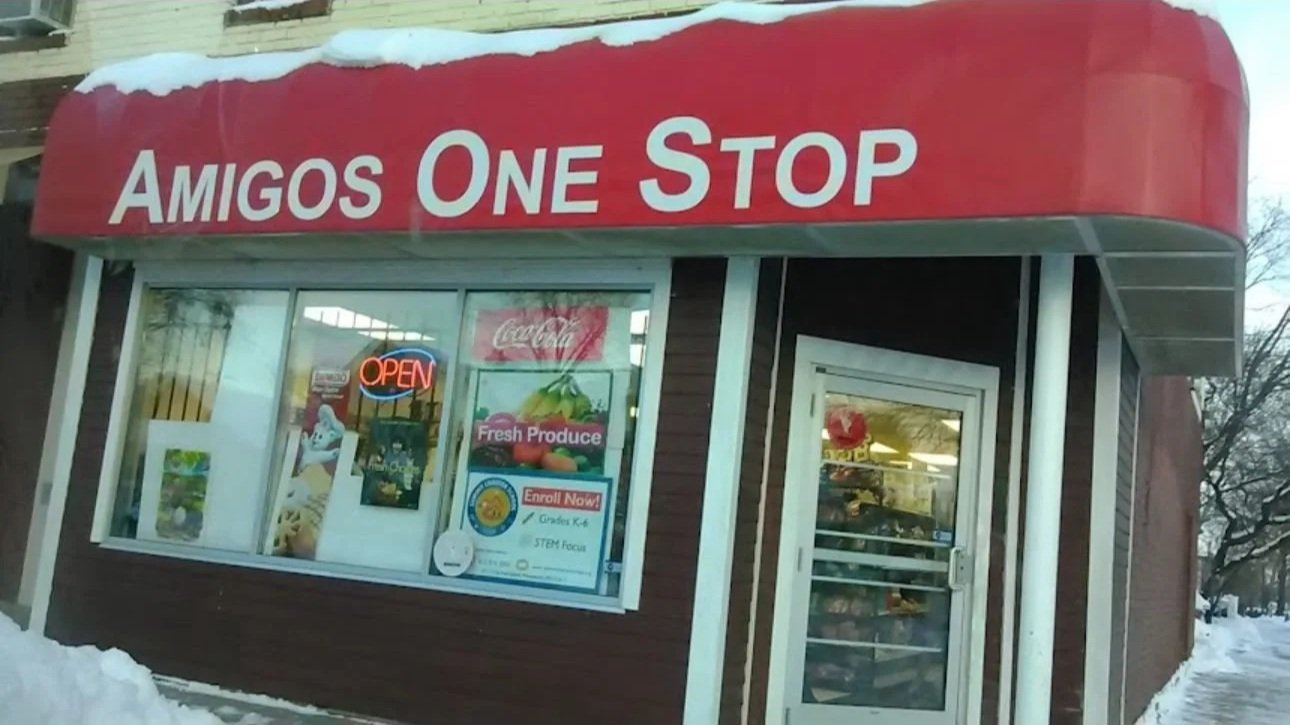
Standing With Community: How Amigos One Stop Became a Lifeline During Crisis
Edited Transcript of the Interview
Jess (00:00)
What are the shifts you've made within the business in wake of the violence and the threat ?
Ammar (00:24)
On the grocery side, what's helping us, we are doing like delivery. This is out of, we're doing things out of our way that we never did it before, but our business never had done it. We have volunteers that they come and they will take the people that order food from the Amigos and they deliver for us. But because the volunteers, you know, we have so many volunteers, you know, I did appreciate that they're very nice people. They're helping us so much.
Because without them, we couldn't reach out to as many people we wanted to deliver the food. That way, we'd keep our business open. And I did not reduce any of my employees' hours, even though a lot of our business went down. But we know they have families and they have bills. And we kept the same hours they were working. We kept it,plus because the volunteers, they come whenever they can. I even have to hire a couple more people, 20, 30 hours a week to help me with deliveries because people help us with volunteers, they come, you know, the hours that they can, but I want also somebody who is stable. Then it's like extra cost for us with less revenue, but we're just doing that. That way we don't have to shut down. You know?
Joanna (01:45)
Wow Ammar. And that's amazing that volunteers are showing up to support this too.
Ammar (01:52)
Oh yeah, I mean when they come here, I tried to give them like a soda, a pastry to eat, Some they want and some they don't. I even asked them to give them like some gas money, they don't want it.
They just want to help because, because they feel, they want to do something because they know, and we have to be really careful with the volunteers too because we have some volunteers coming here too that we are not comfortable with them. We don't know who sent them.
And we have to try to ask their name, where they live, who sent you because... We have few occasions that some not welcome people come and try to do deliveries for us. But I was here and I started asking questions and then they left. It's been challenging. But thank god we are able to stay open.
And we didn't close. The only day we closed was last week to protest what happened when all the business closed in Minneapolis. And this is the second time ever the store closes since we opened.
Joanna (3:00)
Wow.
Ammar (3:01)
The first time we closed was when my father passed away. And then this is the second time we closed the store. And like I said, we never did that before. We're doing something that...
It's very hard when you have to get the order from the customer. You have to prepare the order for the customer and then you have to call the customer to make sure all the items are there. And if there is something that's not there, you have to replace it with something else. And then you have to charge the customer either with the card or you have to take it because we make it easy for them. Either they want to pay with a credit card, debit card or when we go there, they give us the cash.
Like anyway they want to, we make it easy and we don't charge them any delivery fees. We don't charge them nothing. We have volunteers help us and I have employees that I have to hire because some of them drive and some of them don't drive and the ones that drive, some of them are afraid to be delivering, you know? They just don't want to be in the street. Because they were not hired for delivery. They were hired to work at the store. I did understand, I don't want to put them in a …... And they are legal people. They are people who are legal to work in the US, but they're not US citizens, but they're legal, you know? They have work permits for five years, but they're grabbing people. We feel that they're taking people. As long as you're not a citizen you're a target, and that's the problem. You know, my brother and I, it's hard for us to…to deliver the stuff because we have a vision problem. We cannot drive because of our sight. We have to rely on people to, you know, workers and volunteers to do deliveries. My wife sometimes whenever she can, I have four kids. Whenever she can, she helps me to deliver. But you know, it’s challenging… ⁓
Joanna (04:49)
Oh my goodness. It’s a whole other part of work and logistics. That is so incredible that you have found a way to make that happen Ammar, ⁓
So I would love to hear Ammar, the history of Amigos One Stop. How did you start it and was you know, community care and support kind of part of its spirit from the beginning? What's your story and its story?
Ammar (05:22)
Okay, um, Amigos One Stop.
We started back in 2009. My dad passed away like four years ago. My dad, my brother and I, we purchased Amigos One Stop from the previous owner that the store was in the neighborhood of like minority, there was a lot of mixture between brown, white, Spanish people, all mixed together. The previous owners before us, Amigos One Stop has been existing since, but it used to be, it used to call One Stop Minnesota. We changed it to Amigos One Stop.
The previous owners before, they used to just focus on basically just white and brown people and they did not focus on the Latino growing population in our area.
When we started to when we came to Amigos One Stop we saw that Amigos One Stop only was a small business just selling cigarettes, candies, chips basically just stuff you find in a gas station or like a small convenient store.
And We purchased the business we didn't have almost any money like we had to choose, at that time the owner was asking about $50,000 for the business and my dad my brother and I we only had a thousand dollars. And then, and we didn't have a way to get to banks or something. Then I told the owner, okay, I'm going to give you a thousand dollars. And then on October 15, the day of the closing that I will give you the rest of the money.
And then the reason why I did give him a thousand dollars , that's only thing we had. And we told him because we wanted him to hold the business for us.
If we don't bring you the money or we change our mind, we lose the money, you keep the money. And we made an agreement just like the word agreement, no paper, nothing, just like, know, between us and then, he say, “okay”, other people were coming to try to buy the store. He said, “no, I already have ⁓ an agreement with some people and they're gonna take over”, you know, in a few months or something. my dad, my brother and I, were think and say, How are we gonna come up with the rest of the money? Then we were able to ask some relatives for $20,000 loan, then we approached the owner and we, told him, look, we can give you an October 15, half of the money you wanted and the rest of the money we can do with one year payments. And he accepted.
Even he was leaving the country. Even he was leaving the country, he trusted us that we will keep paying until finish. And honestly, we did. And one year we finished paying him off by working on the store. We worked very hard. We didn't have any employees. It was just the three of us. Like, you know, of course I had at time my mom, my brothers were small and we were all living like in the same apartment and we needed to take care of our girls. But whatever we keep investing in this store, whatever is left, we have to pay the debts for the owner and then the debts for the family members. That they had loaned as a $20,000. But of course, first we finished paying the guy, then we pay the family members and then things start getting better for us after we finish all the payments. My dad, my brother and I, we kept you know, fixing the business.
We kept saying, okay, how can we do it to improve Amigos One Stop from what it was. We decide to bring more of the ethnic food that people are you know, around here that they are looking for some other stuff. And then we start to bring in fruits, vegetables. We started bringing like more of the you can find in grocery stores. But we were focusing more on the Latinos because we know kind of what food they wanted and stuff. And it helped a lot that I grew up, I'm from the Middle East, my parents and I, but I grew up in South America, then I grew up speaking Spanish and Portuguese with my cousins.
That helped out a lot to engage with all the customers. And we start asking them what they wanted, what's missing here, and you know, things just, everything was going fine. And then...
we never liked the idea of selling cigarettes in the stores because this is against our principles of selling alcohol or cigarettes or pork. Because we're Muslims, we don't sell any of that. But the store, if we had to remove the cigarette when you took over, basically the store will shut down because customers would come buy cigarettes, would buy soda, would buy juice.
We had to keep the cigarettes. But then in 2011, like few years later, we came to a point that we say, okay, I think now it's time to remove the cigarettes because we have enough customers that are buying other things.
Then, you know, we kept building the business and making it better. Then in 2020, one year before my father passed away, we bought out my friends who helped us to buy the building. We bought him out and we bought him, you know we pay him a sum of money to buy him out from the buildings and from the business. And then it became only the business again, just for my dad, me and my brother, the three of us. Because later we had more expenses, I got married, my brother got married, we in different houses and stuff. It's kind of, you need that.
And then right now, we started just my dad, my brother and I and no employees. Then right now we have like, my brother, sometimes my mom comes and help. My wife helps me with accounting and we have eight employees that are working full time, you know.
You know everything was good.
Even COVID time, we were able to manage things very good. COVID time, it was hard, but we were able to manage it because, you know, just like everyone else, they put the mask and they will leave. That wasn't an issue because I'm not a restaurant I'm a grocery store. I didn't get affected.
And COVID time, actually, the sales still even increasing COVID time for that because people will come. Now, what happened now, since December, 2025, since everything was been, in January, February, March of 2025, you know immigration started like very hard.
And since we start seeing a little bit of decrease in sales, first time ever, since we opened the stores since 2009,
Now, December of 2025, when the government announced that they are sending ICE to Minnesota and they start sending it, yeah, it got us very, bad. Business, yeah, it wasn't easy, honestly. Because what we did the last years also,
decide the grocery store, we extend the business. What we do is people can come here, they can pay their water bill, their electrical bill, their gas bill. They can make a money transfer for their friends, loved ones. If you work at Target, if you work at anywhere. You can pay your payroll check. We'll cash it for you for a very small, a 1%.
It's a very small... We try to do it for people, customers that they come here. We don't have to buy budget too much because we don't want it... It's a high risk. We don't want people to bring a check and then they bounce, we lose the money. But that business, honestly, it went down more than 50 % since December of 2025 because people are not working, are afraid to work, they lost their job, they got deported. That business, you know, 50%, I mean it was 50 to 70%, but maybe to be more realistic, 55%, it went down.
Jess (14:52)
Thank you for sharing everything you have so far here. Could you walk us through your personal experience over the last few weeks?
If you were, you know, if someone knew nothing about the national context, just bringing them into what's happening.
Ammar (15:09)
Since the beginning of December of last year, we didn't see ourselves not to stay open unless we shift to do deliveries to people and not regular delivery is not something simple like Doordash you put it. It's not like that. It's not gonna work like that because the clientele is not prepared for that. They're not used to that. They like to contact you, they like to call you, they like to send you a text message to say I want the order, I want this item and they want to contact directly with you. They don't want online that we have to find the ways to engage directly with the customers, the way we can make them comfortable. Another challenge too, when we go deliver the stuff, some of the volunteers, when they deliver the stuff, the clientele don't want to open the door for them because they're white, they're American. They called me, they said, look, there is a white guy outside. And he said, he's bringing groceries. Did you send him? I said, “yes. He's a volunteer. He's fine.”
I have to reassure them that this is okay, that way they will take the groceries that they ordered. Because, you know, they don't know who is who. And it was a story, one of the volunteers, she came one time, she took an order and she called me and she said, Ammar, I'm outside of a house.
But there is seven sheriff cars knocking on their door. What should I do? I said, “no, no, no, just stay in your car and see what happened. Just wait.” And she waited over there until all the sheriff's are gone because nobody opened the door. And then she knocked on the door. And then I called him. I said, “this is the delivery person bringing you the food. Open the door.” That's how they open. And they let her in.
And of course she was really scared when she came. said, “look, you know, I'm really scared. I didn't know I was going to see that.” And it was that, you you're going to deliver and then you'll be waiting to see what's going to happen and the sherrif is going to take them or not. And they didn't break the door, but they kept knocking, knocking, knocking, knocking. And the people were like, terrorized inside because, you know, I don't know what is it, but we're almost sure that was ICE trying to go in.
But thank God that the volunteer person that was taking the stuff, she did everything fine and she just waited till they leave and then she went to deliver the stuff for them. This is one of the challenges that we have to face. We have to make sure the customers trust who are going to deliver their food. Another challenge was for us to tell the customers just to tell them we are open, you guys can call us for deliveries and another challenge customers sometimes don't have the money to pay. You know, sometimes we try to accommodate them. Sometimes some organizations would say, okay, here $500, you can use it for some people who don't have money. And we've been using that, like, you know, a few money here and there, but it's...
Because I understand these people are working less. These people are not working. These people are afraid to work. Like one of my, when this happened in the first second week of December, one of my customers, she came in the store here and she cashed a check from us, from her work. When she left in her car, ICE picked her up, okay? ICE picked her up outside the store. And then we heard and then the person who saw it said, but she had a kid at school. They have to go tell the husband that the kid is in school and she's supposed to pick up the kid. Then it was challenging because, you know, I didn't know what to do. Honestly, and this person for a fact, her husband came and he showed me the copy of her five year work authorization to work in the U.S. She's legal. I just don't know why are they targeting legal people? The government had issued those documents for them. It's not fake documents. They're real documents. Why the government are targeting people just because they're color people? And a lot of my customers are color people. Most of them are actually color people. Then, you know, believe me, they're not going to come. If they're not US citizens, if they just have some legal statutes, this administration is no protection, you know?
There is no protection for them. That's why, you know, a lot of times they see they're sending their little kids to the store. Like in the cold winter, little kids, 10 years old, are coming and they have a list and we help them to get all the stuff.
Joanna (20:07)
Oh my goodness.
Ammar (20:08)
And we call the parents to see what they need and stuff. And sometimes a lot of volunteers, they come and they shop for them and they have the list, but the volunteers don't know Spanish, don't know the items we sell.
Then my employees will go and grab everything that the volunteer has in their hand. A lot of times we call the customer to see to make sure this is what you want because we sell a lot of the food we sell, it's not only food from Mexico. We focus also food from South America, especially Ecuador. We are very well known in Ecuadorian food, you know.
The community knows Amigos One Stop so much for many years. Also they know that prices of Amigos One Stop, especially in the Ecuadorian food. It's very reasonable comparing to other stores because when we started bringing the Ecuadorian food, to South Minneapolis, was not much stores that selling. It was a few and the prices they have was skyrocketing because they didn't have competition and the prices believe me like, it was, they were making like three four times profit on their items.
After they lost half of their clientele to us, they start to lowering their prices. Those are items that
customers will not find them in big stores because for the big stores it's not worth it to bring some items only for one group of people.
Jess (21:41)
Wow. Such a resource for the community
Ammar (21:47)
We just wish this thing to end. Nothing is going come back like before. All this chaos, just to end. We all agree in law and order, we are fine with it. But go find criminals. Go find people who are doing trouble. But stop focusing on hardworking people, people that just try to make it. Because honestly...what I see especially from the people who come to here, who the family members got caught. Honestly, I don't see them. The only thing they do is homework, family, you know, maybe they take their family to a restaurant. It's just like hardworking people. You're always gonna find in any culture, any community, you're gonna find somebody bad, but there's minimum. Honestly, it's minimum. It's not, it's not.
You know, and I said, we all agree, go find these people. That's fine. Somebody have something criminal, go find him. Maybe he deserves to go. We agree with that. But come on, just stop.
Joanna (22:51)
Yes
Ammar (22:52)
You know, because they're not only, they're taking them out and they're killing us businesses. They're taking us basically out of business. And we have to find ways to stay in business. And a lot of stores, they even had to close. A of stores that didn't have the, they didn't act quickly to start doing deliveries or didn't have enough clientele for them to call them for deliveries. They had to close, reduce their hours, cut their employees. You know, I know some people, they're just working one person she's working, and she was with five employees and she's by herself now and she's not even open, she's just closed because she even scared for herself. You know, it's amazing how things been happening here. I mean, like I said, the only thing is for them to, it's to leave. I mean, there is things people protest and stuff, which all that, it brings the community together. But, you know, it has to come from the top. Basically, they just have to leave from here.
And then, know, we're, you know, the lady who passed away, Renee Good, the one in the car. It happened just few blocks from us. I'm even having my doubts if she was one of my volunteers that used to deliver for us because I don't know, honestly. I don't know but kind of the name Renee, because the volunteers when they come they introduce themselves that name Renee, it'll click and to be honest I have my doubts. I'm sure I had seen her somewhere.
There's a possibility she even did some volunteer for us because she was very good in the community. Since that happened, people were just more and more scared. They said, okay, if they can do that for a US citizen, we all see what happened. We all see that the poor lady was just close to her house.
She was just trying to leave from the scene and you know, it's what you can do to other people like, know, like it's terrible. Like honestly, it's terrible what's happening.
Joanna (24:26)
No, it's, I'm very struck Omar by the way that your, the business has responded is providing care and comfort to people and also taking a stand, like you participated in the strike. And Beloved Economies, our organization, we've been speaking a lot about what it means to be a pro-democracy business in this time. And I'm curious from your experience these weeks, what does that mean to you and what do you hope to see more businesses doing?
Ammar (24:59)
I would ask businesses to try their best to keep their doors open and try their best to keep their employees working even if they have to do something from them, to make less money. Hopefully it's just something temporary and we cannot let this chaos just break us down. We just have to be like united and try to just do the right thing and try to, you know, we're just coming to work. We're not doing anything bad, you know? I mean, it's just, we should do that and try to, hopefully the government will understand that he's doing more harm than good and to leave, you know, to leave people alone. I mean, basically there is...I mean, there's not much we can, we're not asking them for any help. We don't need any help from them. Just leave people alone. mean, just, that's all we're asking from the government. We don't want any money from them. We don't want nothing. Just let people work and if there are criminals, go find them, you know, if there's somebody bad, they should be accountable for whatever they do, but not somebody just because, you know, it's a different color.
Like I was at the, a few weeks ago, I was with my employee. He was driving. He had to park the car by Target because, you know, he need to go in the bathroom quickly. He have like almost diabetes. And I wait in the car for him and then somebody approached me, a car next to me, approached me. I was in the passenger side. He asked me to roll down the window. I rolled it. He said, what you doing here? I said, I'm waiting for my friend. He went inside. He needs to use the bathroom.
Then I don't know because of my sight, I don't know exactly who was that. Then some white person, American, I don't even know that person, he came and he started screaming at the guy who was asking questions. He said, get out from here. Leave color people alone.
And the guy left. Then at that time, I said, you know, maybe that was ICE. I don't know.
Joanna (27:14)
Wow.
Ammar (27:15)
I don't know, honestly. That experience I had. And the store we're in the corner of Chicago and 32nd. And when that first start happening, like in December, the first weeks of December, we had...
ICE cars were keep coming around the store, And then every time they're getting closer and closer, all the neighbors, American neighbors, they came and they stood in front of the store and they started blocking them. And I had a lot of customers in the store, but they were afraid to leave. Then the volunteers outside started taking people home. They started driving them home.
Because we don't know. I don't know if ICE was trying to come up in the store, but they were for the whole day, they kept just going around the store. ⁓
Joanna (28:02)
My gosh Ammar, that's so scary.
Joanna (28:06)
And you're doing so much more than just work. You really, I can feel all the ways that Amigos One Stop is being a blessing for the community.
Jess (28:19)
What lessons or what advice would you have for, let's say, another store like yours, but in a different city?
and this happened to the community? What advice would you have from what you've learned?
Ammar (28:31)
Basically, basically the advice for the other stores, you know, is to try to reach out to their customers any way they can and to see how can they help the business to stay open and how can they help the people to see what they need. Especially their customers, like, you know, it's like, you know your customer, like you're going to start always with your customer because that's relationship you have with. And then you start with that person.
They can start having this conversations and then to see how can they help them and how they can explain to them that we do deliveries, if you guys need it and we don't charge. The main thing is you don't have to charge them for delivery fees because this is an extra charge on them.
Even though the stores have extra charge, because sometimes you have the volunteers, but sometimes you have to use your workers, you have to hire new people to do it. It's extra charge, but it's okay. If you're to tell people,” I'm going to tell you $10 to deliver your groceries”, then the person is going say, “okay, well, no, that $10, I can buy maybe two dozens of eggs with it” or something. Sometimes maybe people will accept, but they don't have a choice.
We don't honestly, we don't charge them like my advice is to stores, try not to charge them for deliveries, you know, because people in general don't like to hear, oh, I'm gonna charge you so much for delivering and you know I'm struggling.
Jess (30:05)
That makes a lot of sense. That's really good advice. And just it’s so, I mean, so evident how your customers and your staff and you and your family are part of the same team, you know, working together through this and just one community. And I think that will be really, really inspiring and a lesson for other businesses.
Thank you so, so much.
Joanna Levitt Cea (30:31)
And Ammar, when we share this story, is there, can we include like, what is a way that people can support from afar?
Ammar (30:40)
You know, I know, I know a lot of people that come to the store that are in need of like, groceries, like basically because-
Everybody has to eat because we sell groceries. We sell medicine. We sell a cleaning supply. We sell like a lot of stuff. And sometimes people will donate to some people, sugar and salt and rice. But some people need like for example, the woman stuff. Some people need like diapers for babies. Sometimes baby formula. There are items that I know people in the community they need. And to be honest, I'm in Minneapolis, but I swear to you, we are delivering food and we're trying to help even people, even like even 30, 40 minutes from here sometimes. Like not only Minneapolis, because there's a lot of people call us from St. Paul, from Plymouth, from Bristol, from Richfield, from Edina. And those are all an extra cost and it's less revenue. This is my extra cost.
Like I said, sometimes it's a wife, husband and three children, husband got deported, wife is only working two days a week.
Or sometimes they didn't get deported, they're both here, but they cannot work because they work in construction, but because of what's happening, there's no construction work now. Or sometimes they are afraid to go, or sometimes their boss tells them, you know, don't come to work because you're liability
Joanna (32:15)
Wow.
Ammar (32:16)
And I start asking, “hey, how is everything? What's happening?” And they tell me their story and stuff. And if I see, you know, I can tell them, okay, you know, every week I'm try to call you to see what you need and we can make it delivered to you. Or if you can send somebody to pick it up, it's fine too. You know, stuff like that, will help the business to stay open and would help the people.
It's, you know, the community is nice here. People are very supportive. Like, you know, the neighbors are watching out for each other here. They, you know, sometimes I have neighbors waiting outside and at the store close that they will leave because they don't want the workers or customers to feel afraid, at least, that can help a little bit, you know, when you know there are people out there, you know, looking out for you.
Joanna (33:06)
Yes.
Ammar (33:07)
I just want to end with this. I know Minnesota Minnesotans are nice, but I didn't know they were that nice because I didn't know. I saw it before. I hear it all the time, but now I witness it with my eyes because they're doing things out of their way to try to support the people who got impacted with this. You know, this is like, we witnessed it like I, I'm even surprised. To be honest, I even had volunteers to come and to take delivery to people and I say, okay, you're going to charge the customers $62 when we deliver the items. He said, “ that's fine. I'm going to pay for his items.” They will pay for it and they will go there and they will not charge him. I had few occasions like this. You know, people, they're going out of their way to help in what they can. like I said, I Minnesota, like, I witnessed it, but how they are really, really, really, really nice people.
Maddy (34:10)
Hi, I'm Maddy with the production team here at Beloved Economies. I wanted to share that since our initial conversation, we've had subsequent phone calls with Ammar and I've incorporated more of his insights. You will see these additional conversations reflected in the articles itself, as well as summarized below by my colleague Joanna after her last call with Ammar.
Joanna Levitt Cea (34:35)
I just got off the phone with Ammar, and I met and spoke with his wife as well. And it was a very moving conversation.
And he wanted to share the ways the store has changed. He said even just in the time since we've spoken, there's been an increase in children coming to the store and there's been an increase in the level of need that families have. And he shared two stories, which I'll share here.
But about a week ago, a 10-year-old came into the store who wasn't even wearing proper shoes for the winter. And he had $3 in coins and said, could they please help him get vegetables for his mom? And Ammar asked, how's his mom and how's his dad doing? And he said his dad has been without work for a while and his mom recently lost her job.
And he said, okay, well, in terms of vegetables, what do you need? Can you please tell us everything you need? And Amar and another employee packed him, like over $100 worth of groceries and helped him home. And then just yesterday, another child, probably less than 10, came into the store and asked Amar, did he please have a job for his mom?
And he asked what's happening with his mom. He said it's just his mom and she lost her job. And he said, you know, I don't have a job for her, unfortunately, but can you tell me what you need? And he said, I think we need everything. We don't have anything left at our house. And he said, well, let's let's call your mom and make a list. And he said they helped him call his mom and they made a list. And he said to me, he's like, with God as my witness, I want you to know I'm not.
saying this to exaggerate, but we filled all the needs that she said and we put together over $300 of groceries for him. And I told him, you come back again next week and you tell us what you need.
And one of the store employees, he had drive the little child home and accompany him home with the groceries so that he could get home safe. And Amar said in terms of what that means for his advice for businesses, he was like, here's the thing. The businesses have to start to take the leap first in terms of recognizing there's times when it is okay to make less money.
When donations come, that emboldens us to do more and to keep being generous and to see what else we can do. But the business has to take the leap first and to remember when it is okay and appropriate to make less money because of what's happening. And we are in one of those times right now. So that's what we're doing. And whether customers have the ability or not to pay, our message to them is always, we want you to come back.And we want you to feel welcomed back here.
And his other piece of advice is customer care and service is our highest priority. And I tell everyone in the store that he, Ammar, I set the example of how we treat customers. So you can follow my example. And if you ever see me do something that you think isn't just top-notch care and respect, please tell me. You can yell at me.
He said, but that hasn't happened because they know I won't actually do that, but that's the standard we share.