
Transforming how we work to build beloved economies
Beloved Economies’ foundational research, co-directed by Jess Rimington and Joanna Levitt Cea, spanned nearly eight years and involved more than one hundred contributors. The multi-phase process illuminated powerful dynamics underpinning how transforming the way we work can drive economic transformation more broadly.
What the research tells us:
Business as usual is profoundly undemocratic.
At the heart of this research is a key finding: most businesses unknowingly weaken both democracy and their own potential for innovation by replicating outdated practices that concentrate what we call the “rights to design” — the authority to imagine, decide, and shape how work gets done.
Skillfully redistributing rights to design unlocks success.
Businesses, organizations, and teams that depart from the status quo to work in ways that widely distribute rights to design achieve a unique form of success: breakout innovation. They outperform industry standards and achieve results that are deeply imaginative and high-value for those they serve.
There are seven practices that underpin this success.
Groups that achieve this success through sharing power follow a common pattern: They work in ways that embody seven specific practices. Regardless of industry or type of organization, these practices underpin groups’ ability to successfully channel the potential of broadly distributed rights to design.
The seven practices echo dynamics of healthy, living ecosystems:
The seven practices echo core principles from a foundational body of work in biomimicry called Life’s Principles, which distills overarching patterns embodied by nearly all living organisms and ecological systems on our planet. The similarities illuminate ways of operating together that support life.
Re-designing how businesses operate can shift the economy overall:
When groups work in ways aligned with the seven practices and achieve forms of breakout success, doing so creates powerful ripple effects: It can shift norms within a sector or industry; spark change across a geographic area; and inspire new policy.
Transforming how we work is a powerful lever of broader economic change.
Learn more in the award-winning book, Beloved Economies: Transforming how we work.
Beloved Economies’ foundational research: Phases & Contributors
Co-directed by Jess Rimington and Joanna Levitt Cea, Beloved Economies’ foundational research was conducted in collaboration with over 100 contributors, through three phases spanning 2015 to 2022:
-
Literature review on historical origins of business-as-usual norms, and contemporary trends related to power-sharing.
Desk research (confined to US geographical scope) to identify stand-out cases of enterprises experimenting with power-sharing practices and achieving success.
Contributors:
Hudson Brown
Kate GasparroAdditionally, Dr. Ashby Monk served as advisor to the research during this phase, at which time Jess Rimington & Joanna Levitt Cea were Visiting Scholars at Stanford University's Global Projects Center. Dr. Monk then continued to engage as a member of the co-learning community.
-
Formation of a co-learning community comprised of leaders from the stand-out enterprises identified previously;
iterative analysis with the co-learning community to identify an initial set of five practices common across the enterprises;
independent evaluation to cross-check the validity of the five practices.
Contributors:
Dylan Rose Schneider
Hafsa Mustafa
Melissa Nelson
Milo Strickland
Shelly HelgesonMembers of the Beloved Economies Co-Learning Community
-
Multiple follow-up interviews with co-learning community members to examine dynamics and correlated outcomes of the practices;
identification of two additional practices;
"prototyping" a meta-analysis with co-learning community and refining this analysis through their feedback;
collaboration with Biomimicry for Social Innovation to examine the correlation between the seven practices and core dynamics of healthy living systems;
narrative research to understand how to effectively convey the findings in accessible and resonant ways.
Contributors:
Anastasia Nylund
Anke Ehlert
Brent Dixon
Deborah Bidwell
Ellie Diaz Bahrmasel
Fiona Teng
Jaclyn Gilstrap
Lauren Ressler
McCall Langford
Milicent Johnson
Milo Strickland
Nairuti Shastry
Rahmin Sarabi
Scott Shigeoka
Sonia Sarkar
Toby HerzlichAdditionally, the analysis was supported through manuscript review and feedback by: Dr. Bradford Baker, Dr. Caitlin Rosenthal, Dr. Dayna Baumeister, Dr. Fred Block, Jaclyn Gilstrap, Jaime Westendarp, Dr. Jenny Cameron, John Egan, K A McKercher, Larnies Bowen, Mara Zepeda, Mutombo Mpanya, Rebecca Rozin, and Dr. Tiffany Johnson.
-
Comprised of 60 individuals leading and/or learning from exceptionally successful initiatives that embody power-sharing ways of work:
Aisha Shillingford
Alfredo Cruz
Andrew Delmonte
Antionette D. Carroll
Ashby Monk
Banks Benitez
Ben Joosten
Beth Mount
Betsy Wood
Bobbie Hill
Brian McLaren
Brian Mikulencak
Brooking Gatewood
Bruce Campbell
Bryana DiFonzo
Connor McManus
Dawn Neuman
Debbe McCall
Deborah Bidwell
Ed Whitfield
Edgar Villanueva
Enoch Elwell
Eryn Wise
Eugene Eric Kim
Farhad Ebrahimi
Isabella Jean
Jane Hwang
Jerome Segura III
Jessamyn Shams-Lau
Jessica Amon
Jessica Norwood
Joe Terry
John Ikerd
Kalsoom Lakhani
Kataraina Davis
Katherine Tyler Scott
Kelley Buhles
Kelly Ryan
Kyle White
Lynn Cuny
Maggie Nichols
Maile Keli‘ipio-Acoba
Marion Weber
Markese Bryant
Maurice BP-Weeks
McCall Langford
Melissa Lee
Nancy Zamierowski
Nina Sol Robinson
Paula Antoine
Rahwa Ghirmatzion
Rebecca Petzel
Serena Wales
Sharon McIntyre
Stephanie Wilson
Steven Bingler,
Tatewin Means
Toby Herzlich
Vera Triplett
Virgil A. Wood
We are grateful…
to the philanthropic support, the pro-bono contributions, the generosity of spirit, and profound insight shared by so many people to make Beloved Economies’ foundational research possible.




























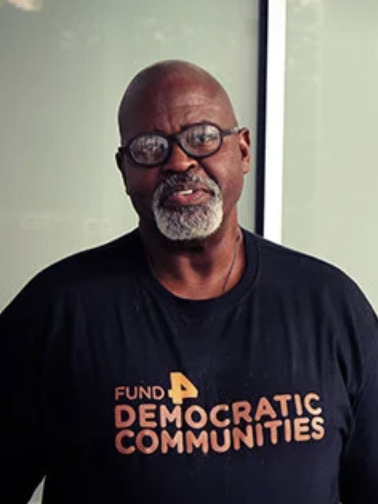













Pictured: Members of the Beloved Economy co-learning communities. Learn more in the book.